India’s tea industry supports around 2.5 million workers. In Assam alone, more than 684,000 people rely on tea for their livelihoods – over half of them women.
Yet despite Assam producing over 50% of India’s tea, many tea estate communities continue to face deep-rooted social, economic and environmental challenges.
Low wages, often paid partly in kind, limited access to clean water and sanitation, and inadequate healthcare and education infrastructure remain everyday realities. Social protection systems are weak and gender inequality is stark: women remain underrepresented in leadership, face heightened risks of gender-based violence, and shoulder disproportionate domestic responsibilities.
These systemic issues require long-term commitment and change driven from within communities themselves.
Against this backdrop, the Plantation Community Empowerment Programme (PCEP) was created – a multistakeholder initiative designed to strengthen wellbeing, dignity, and participation within tea estate communities across Assam.
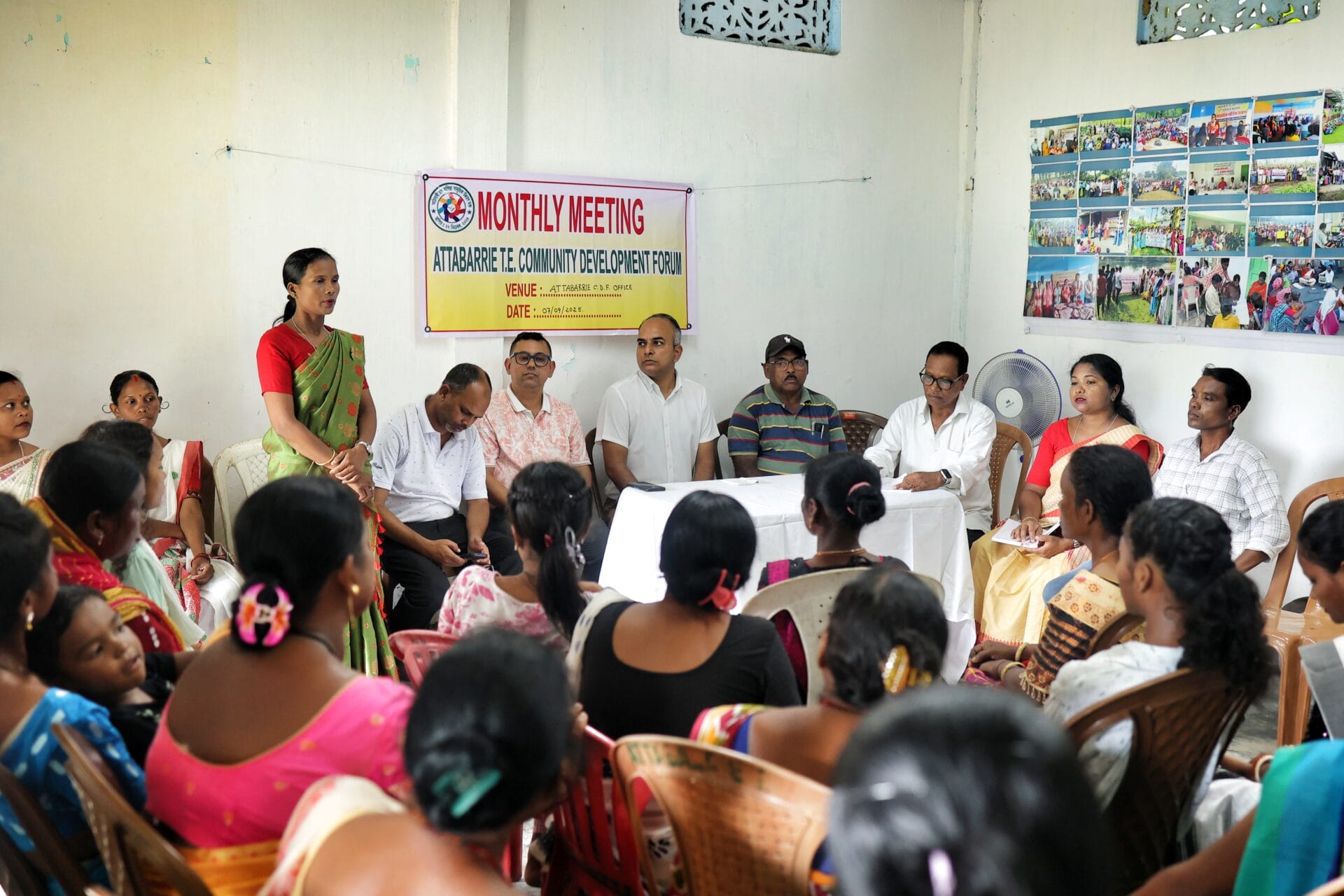
A Community Development Forum meeting
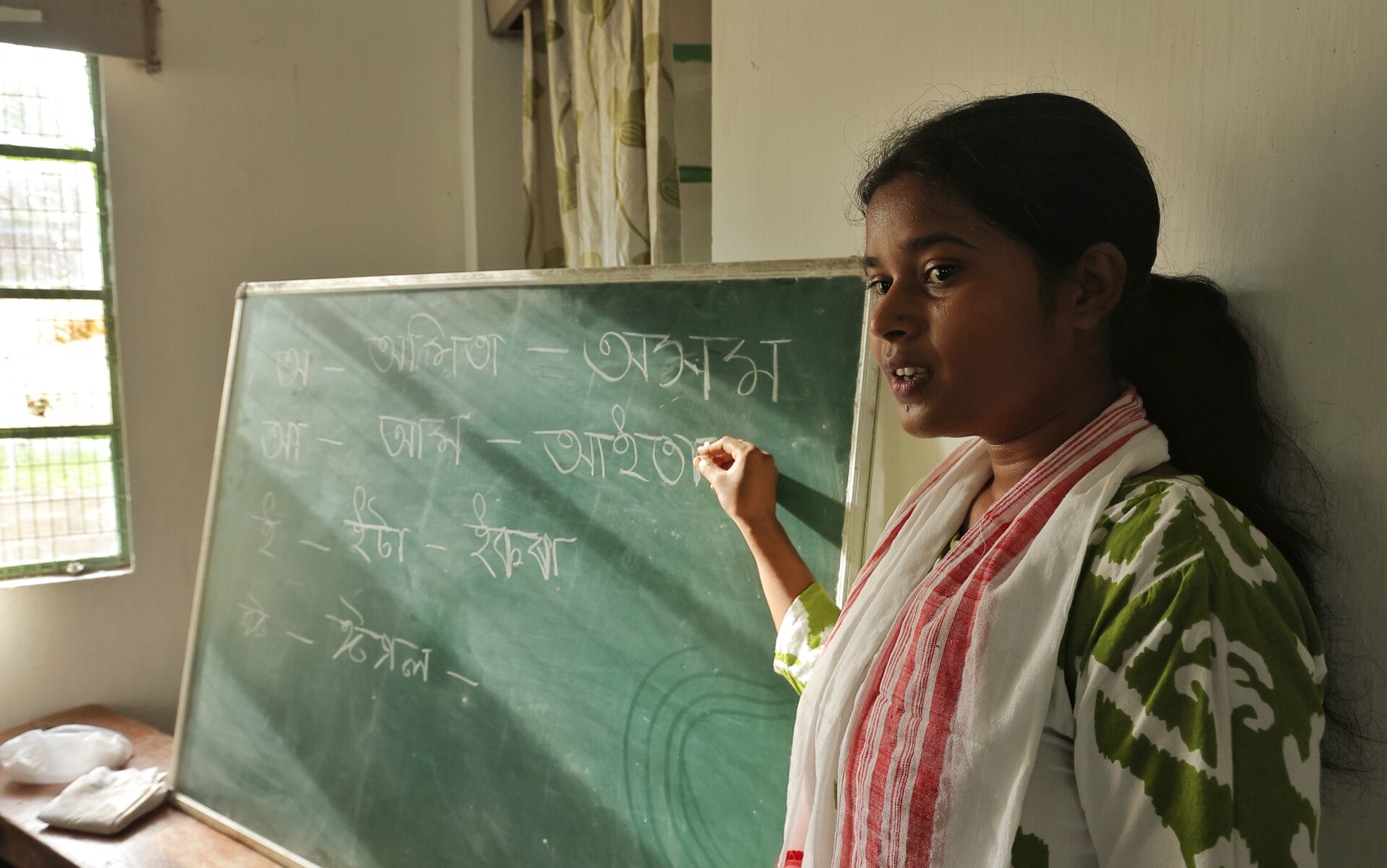
Adult literacy centres
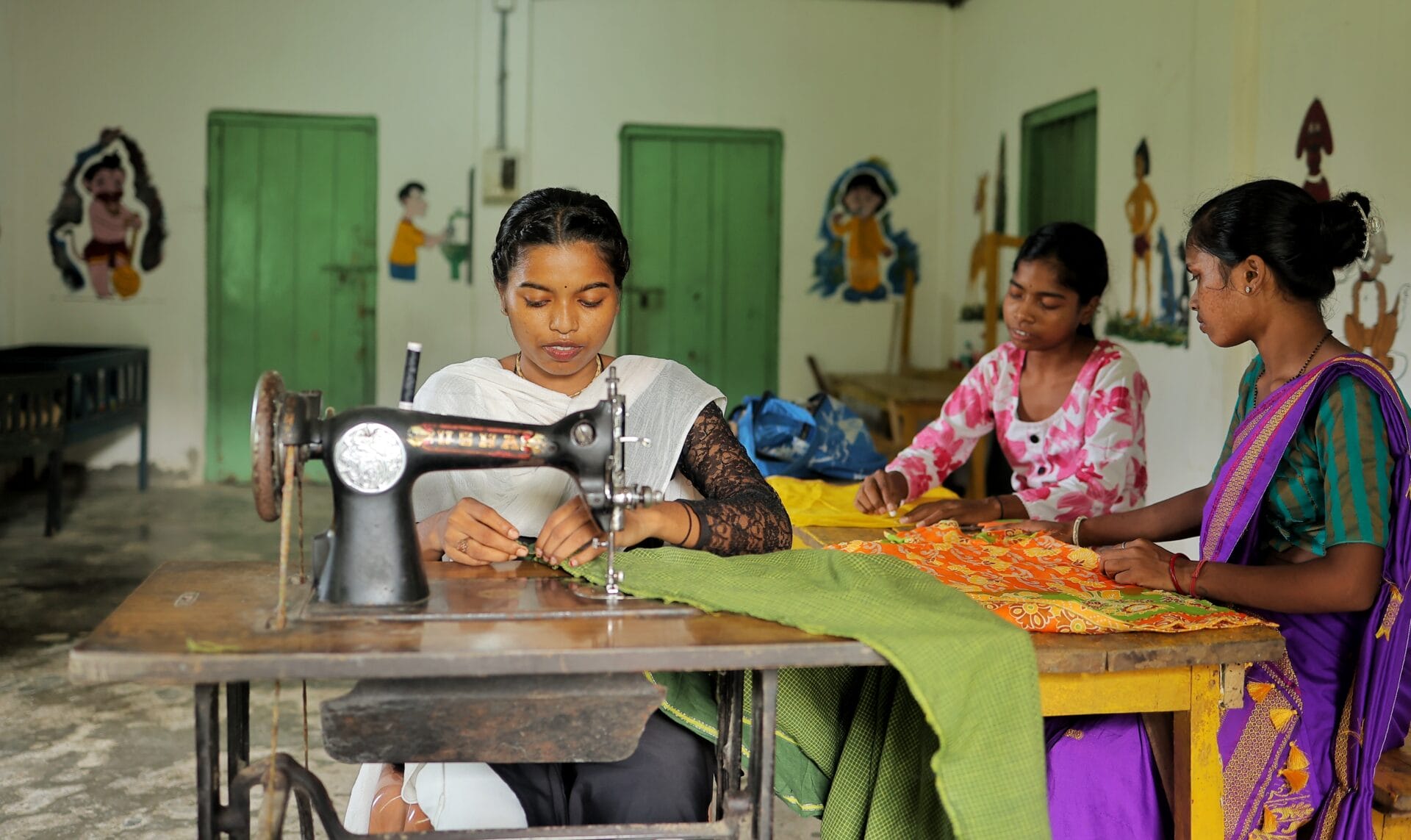
Sewing skills workshops to support income diversification
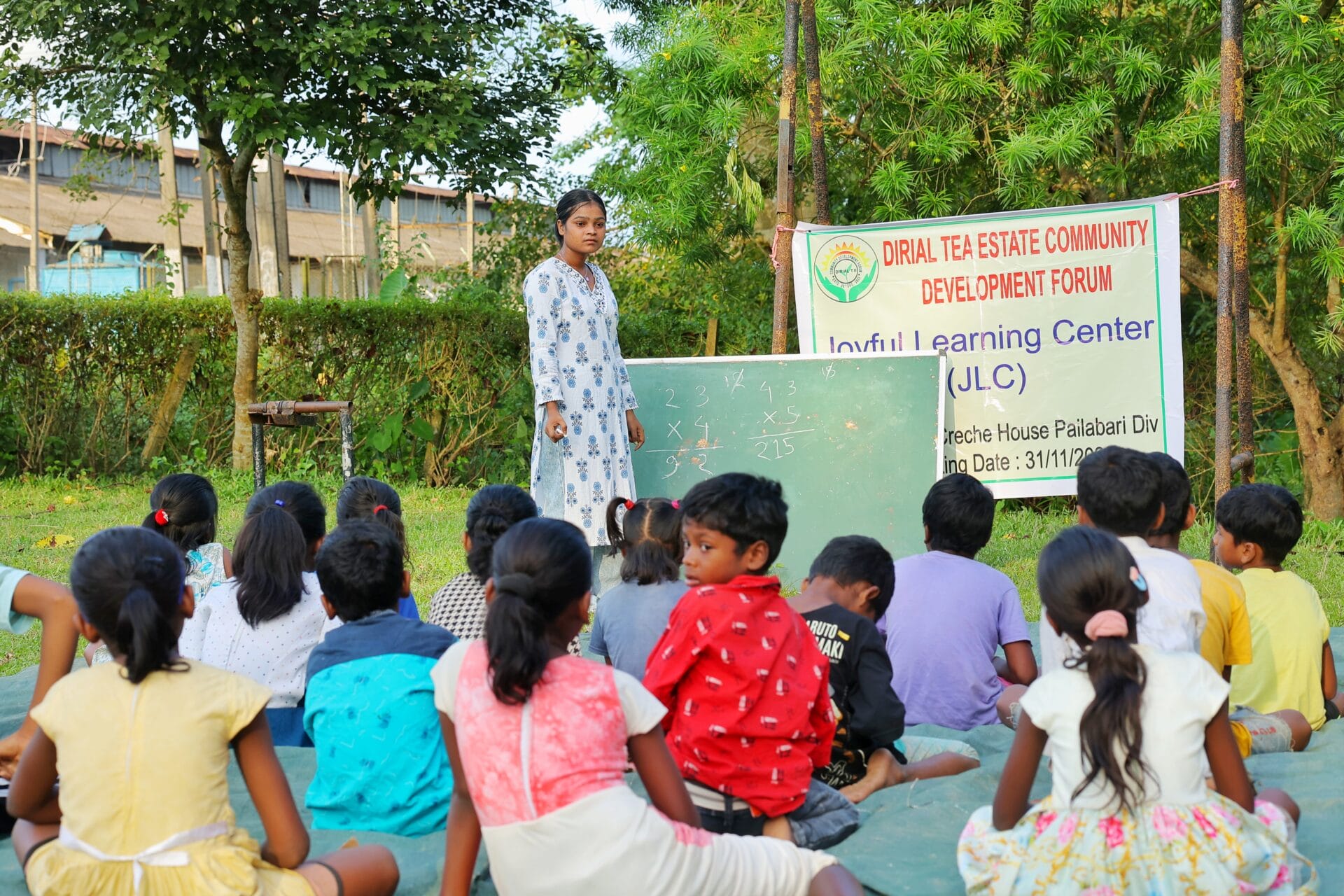
Joyful Learning Centres to support children and their families
A Community Led Approach
At the heart of the programme is a simple belief: lasting change must be led by people who live and work in tea communities. This philosophy has shaped every phase of the programme.
Central to the PCEP are Community Development Forums (CDFs) – estate level, community led groups that bring together workers, women’s groups, youth, elders, estate management, and in some cases health workers and local government representatives. CDFs give communities the leadership structures and decision-making power to identify priorities and drive solutions.
Key features of the CDFs include:
- Purpose-built platforms for identifying shared challenges and developing collective, estate-level solutions
- Representative membership of 35–40 people, including at least 50% women, comprising workers and estate management, with elected leadership
- Capacity building through training in leadership, organisational development, and community engagement
- Estate Development Plans (EDPs) shaped by community priorities
- Registration under the Societies Registration Act, enabling CDFs to operate independently and access government schemes
CDFs are demonstrating that inclusive dialogue and shared ownership create a powerful foundation for progress. Suzy Garraghan, Head Tea Buyer said:
One of the biggest shifts has been simply creating structures that allow people to be heard. When workers and community members perspectives shape decisions, the outcomes are more relevant – and much more likely to last.
"From a Pilot to Scale: Growing a Movement across Assam
What began in 2017 as a three estate pilot built on partnership between us, the Ethical Tea Partnership (ETP), and producer partners McLeod Russel and Goodricke, has since expanded to more than 20 estates across nine regions. Phase two (2022 to 2025) brought in a wider network of partners including Luxmi Tea, Rossell Tea, Jorehaut Group, and buyers such as Jing Tea, Lavazza, and Ostfriesische Tee Gesellschaft.
By the end of this phase, the programme had touched the lives of approximately 100,000 people, with 1,801 community members directly involved in CDFs.
Joyful Learning Centres
One of the first issues raised by communities was concern for children after school hours while adults were working. In response, CDFs created 32 Joyful Learning Centres – safe, supportive spaces for children to learn and play during the afternoon.
These centres have quickly become part of estate life. School attendance has improved, enthusiasm for learning has grown, and children who had dropped out have been encouraged to return. CDF members led ‘School Chalo Abhiyan’ (‘Back to School’) campaigns, visiting families and supporting children back into education.
Opening Doors for Adult Learners
Communities also recognised the need for adult education –particularly for women who often had little or no opportunity to learn literacy skills. CDFs established Adult Literacy Centres, offering accessible sessions outside working hours.
For participants, these centres have been transformative. Gaining literacy has boosted personal confidence and independence – helping people manage finances, fill out forms, and access government schemes.
New Skills and New Sources of Income
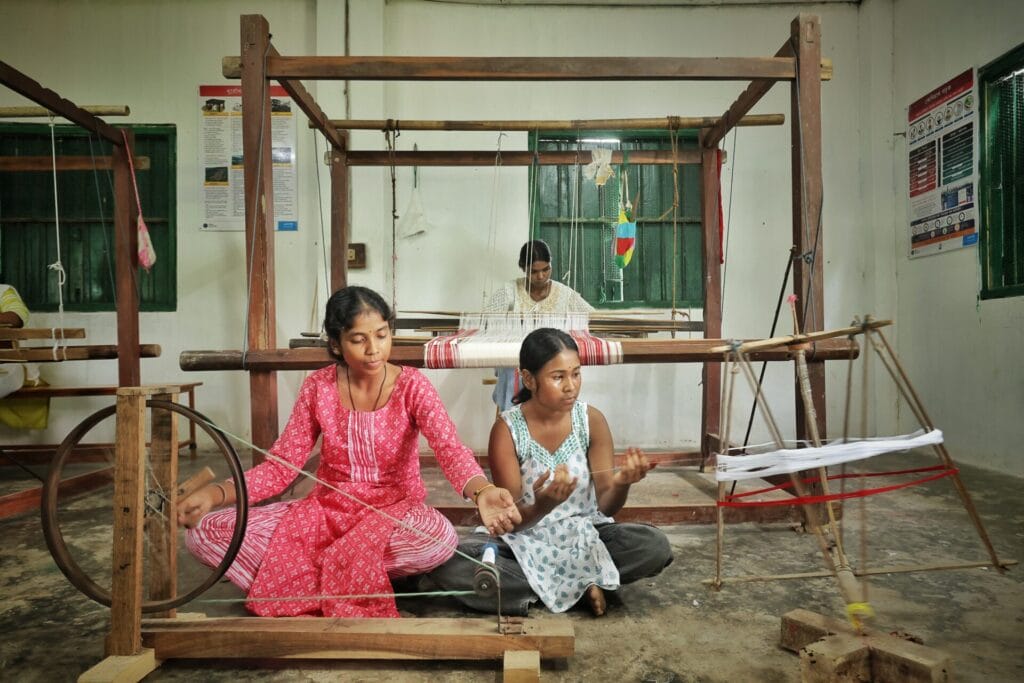
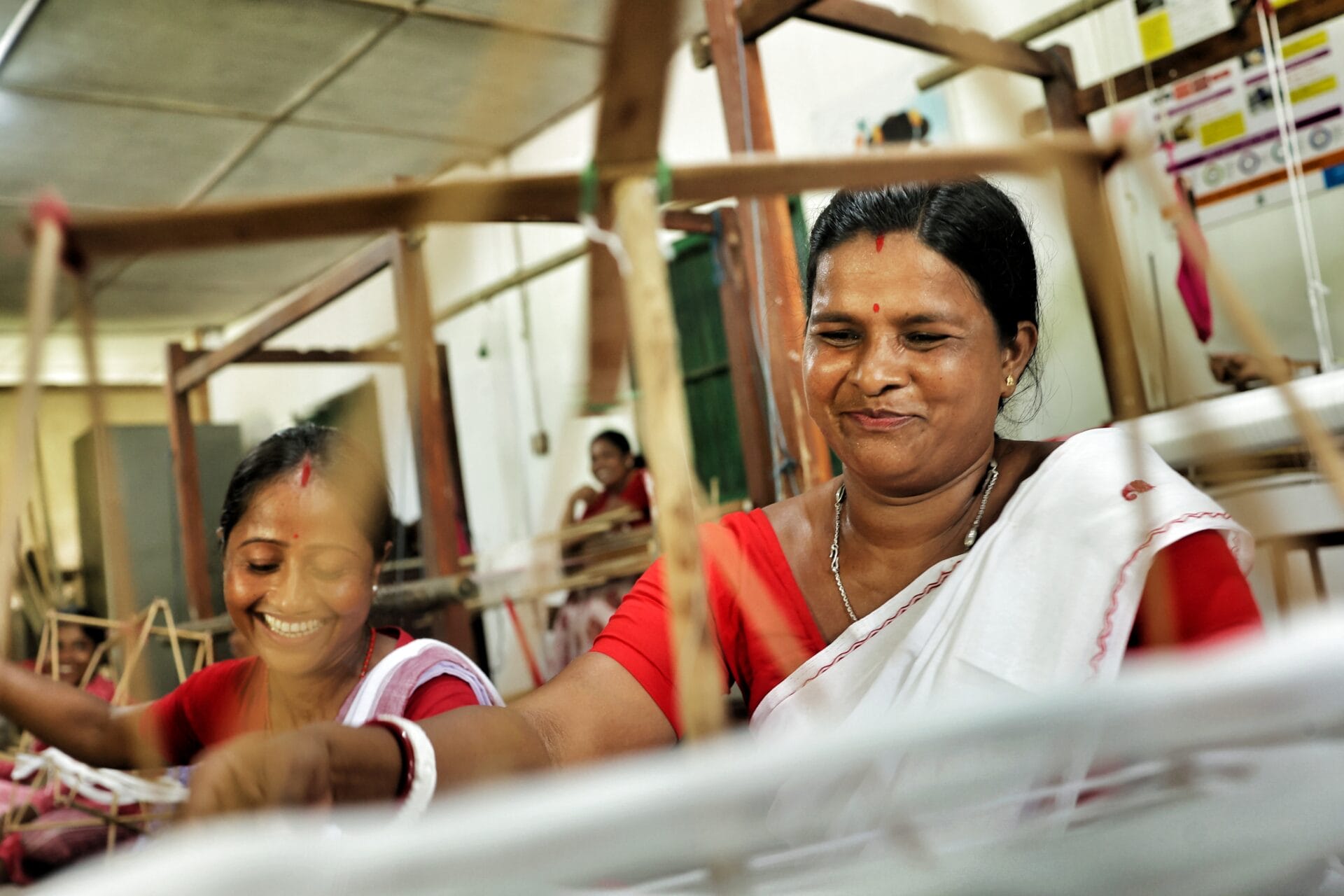
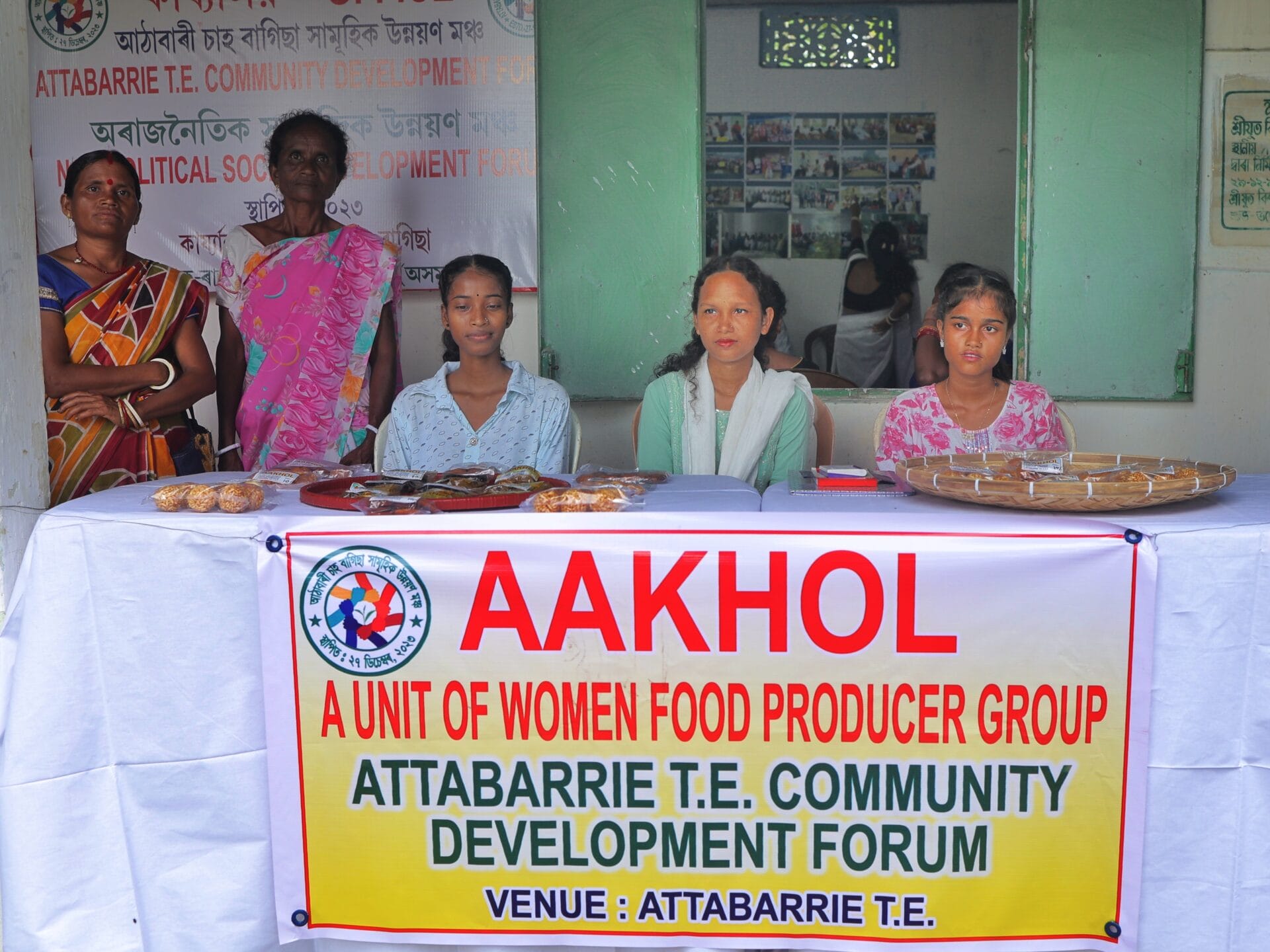
Strengthening wellbeing also means supporting families to build more secure and diverse sources of income. Through the CDFs, communities identified skills that could support new livelihood opportunities, particularly for non-working women. This led to the creation of weaving centres, tailoring units and small food-production groups – initiatives that offer both training and the potential for additional earnings.
One example comes from the Keyung Tea Estate, where a Handloom Training Centre was established. With support in training and equipment, the centre is now producing handloom items such as handkerchiefs for sale. Two trainees, Rina Rowtia and Amina Munda, shared:
We had heard of handloom weaving but never imagined we could learn it and find a way to earn an income. Now we’re making handloom products and selling them. If this continues, it will open the doors for many non-working women, providing a new source of livelihood and additional income.
"
Looking Ahead
The PCEP has shown that when communities have a voice – and the structures to exercise it – change becomes both possible and sustainable. We are grateful to all those who have partnered with us on this programme, and we look forward to continuing to work collaboratively with suppliers, experts and communities to help create a more sustainable, thriving tea sector in Assam.
All images: Copac Media LLP